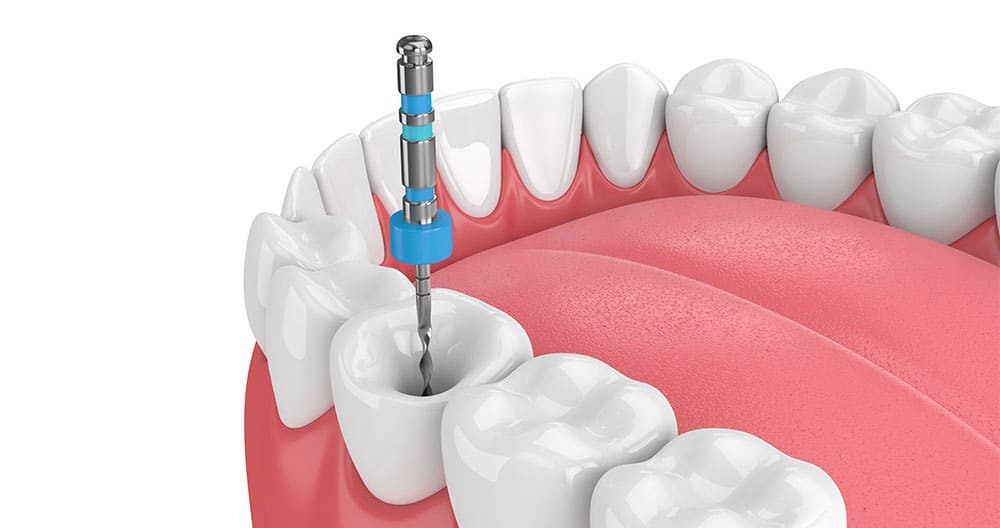
A root canal is a way to keep a tooth when the soft tissue inside it, the pulp, has become infected or badly inflamed. At BWG Dental Centre, 88 Barrie Street in Bradford, Dr. Rebeca Riojas-Ozturk, our general and family dentist, provides root canal treatment as part of everyday family care.
This page follows the questions patients tend to bring to the chair. Is this the kind of tooth problem that needs a root canal? Is the tooth worth saving? What do the appointments involve, and how do you look after the tooth afterwards? If a tooth is bothering you now, call us at (905) 775-7005 rather than waiting to see if it settles.
Could my toothache mean I need a root canal?
Only an examination and x-rays can answer that. Pain on its own is a poor guide: some teeth that need treatment hurt a great deal, and some do not hurt at all. These are the patterns that usually lead your dentist to look more closely at the pulp.
Cold or heat that lingers
A quick twinge from something cold that fades in a second or two is common and often minor. Sensitivity that carries on for many seconds after the cold or heat is gone can be a sign that the pulp is inflamed.
Pain when you bite down
A tooth that hurts when you bite, or when you let go of a bite, may have infection around the end of the root, or it may have a crack. Both need checking, because the treatment for each is different.
A small bump on the gum
A pimple-like bump on the gum beside one tooth, sometimes with a bad taste, can be an infection draining. It often does not hurt, which is why people leave it. It still needs to be seen.
Swelling, or a tooth that has darkened
Swelling in the gum, face or jaw should be looked at promptly. A single tooth that has turned grey or darker, often years after a knock, can mean the pulp inside has died.
No warning at all
Sometimes the first sign shows up on an x-ray at a routine checkup. That is one reason regular dental hygiene visits are worth keeping.
If swelling is spreading, or you have a fever or any difficulty swallowing or breathing, go to an emergency department straight away.
Is the tooth worth saving, or should it come out?
This is a fair question, and patients ask it often. Your dentist will give you an honest view of your particular tooth, and the decision is yours.
Things that point toward saving the tooth:
- enough healthy tooth remains to rebuild it
- the gum and bone around it are in reasonable health
- the tooth matters for chewing or for how your smile looks
- you would rather keep your own tooth where that is reasonable
Things that may point toward removing it:
- a crack that runs down into the root
- very little tooth left above the gum line
- advanced gum disease around that tooth
Removing a tooth is sometimes the right choice. If you go that way, it is worth thinking about the gap as well. Replacing a missing tooth later may mean a dental bridge, a denture or a crown on an implant, and each of those has its own time and cost. You can read more about tooth extractions at our office.
How is a root canal done?
Treatment is usually finished in one or two visits, depending on the tooth and how much infection is present. In general terms:
- Assessment. Your dentist examines the tooth, takes x-rays and explains what they show. That includes what is likely to happen if you choose not to treat it.
- Freezing. The tooth and the area around it are numbed with local anaesthetic before any work starts.
- Keeping the tooth clean and dry. A thin protective sheet is usually fitted around the tooth so that saliva stays out while the inside is cleaned.
- Cleaning the canals. A small opening is made in the tooth. The infected or inflamed pulp is removed, and the narrow canals inside the root are cleaned and shaped.
- Sealing. The canals are filled with a rubber-like material called gutta-percha, and the opening is closed with a temporary or a final filling.
- Rebuilding. Many back teeth then need a crown to protect them. More on that below.
The practice has LightWalker dental lasers, which are used for some treatments. You can read about the LightWalker dental lasers.
If you feel anxious about dental work, say so when you book. We can talk through options to help you feel more relaxed. Our sedation dentistry page explains more.
What do the first few days feel like?
Once the freezing wears off, the tooth and the gum around it often feel tender for a few days, particularly when you bite. Most patients manage with the pain relief their dentist suggests. Your dentist will advise what is suitable for you, based on your health history and any medications you take.
For the days after treatment:
- chew on the other side until the tooth has its final filling or crown
- with a temporary filling in place, avoid hard and sticky foods on that side
- keep brushing and flossing, gently around the treated tooth
- if a temporary filling comes out, call us so it can be replaced
Call the office if the pain is getting worse rather than better after a few days, if swelling appears, if your bite feels high, or if you react to any medication.
Why might the tooth need a crown afterwards?
A tooth that needs a root canal, especially a back tooth, has often lost a fair amount of structure to decay, old fillings or the treatment opening. It can become more brittle over time. A crown covers the tooth and holds it together, which can lower the chance of it cracking under chewing forces.
Not every tooth needs one. A front tooth with most of its structure left may do well with a filling alone. Your dentist will explain which applies to you, and you can read about dental crowns at BWG Dental Centre.
A long delay between the root canal and the final restoration can let bacteria leak back in, so it is worth booking that next step promptly.
What affects the cost of a root canal?
We do not list prices online, because every tooth is different. The main factors are:
- Which tooth it is. A front tooth usually has one canal. A molar often has three or more.
- How complex the canals are, and whether the tooth has been treated before.
- What comes next. A build-up filling, a post or a crown each add to the overall cost.
- Your coverage. Dental insurance plans and the Canadian Dental Care Plan each have their own rules.
Before treatment begins, we go over what it is expected to cost and what your plan is likely to pay. The practice accepts most insurance plans and participates in the Canadian Dental Care Plan.
When would I be referred elsewhere?
Most root canals are routine work for a general dentist. Some teeth are harder to treat: canals that are very curved or blocked, a tooth that was treated years ago and has become infected again, or a root with an unusual shape. In those cases we will refer you when a specialist’s care is needed, and we will explain why before you decide.
Frequently asked questions
Can a front tooth need a root canal?
Yes. Front teeth can need root canal treatment too, often after an injury. They usually have a single canal and may not need a crown afterwards, though your dentist will advise on your tooth.
Can antibiotics fix the tooth instead?
Antibiotics are sometimes prescribed, for example when swelling is spreading, but they cannot clean out the infected tissue inside a tooth. The source of the infection still has to be treated, either with a root canal or by removing the tooth.
Will the tooth look different after treatment?
Usually not once it is restored. A front tooth that had already darkened may stay darker, and your dentist can talk with you about options for improving its colour.
Does the Canadian Dental Care Plan cover root canal treatment?
The Government of Canada lists root canal treatment among the services that could be covered, subject to the plan’s rules and your co-payment level. Some services need approval from the plan first. Our team can explain what applies to you before treatment.
How long does a tooth last after a root canal?
Many treated teeth last for years, especially when they are well restored and kept clean, but results vary. A treated tooth can still decay or crack, so regular checkups let us keep an eye on it.
Can I drive home after my appointment?
With local freezing alone, most patients can. If any sedation is used, your dentist will tell you beforehand whether you need someone to drive you.
Booking a visit for a tooth that is bothering you
Call us at (905) 775-7005 or use our appointment request form. If you are in discomfort, mention it when you call: the practice tries to see patients in discomfort on the same day when the schedule allows. See same-day dental visits. Our team speaks English, Spanish, French and Urdu.