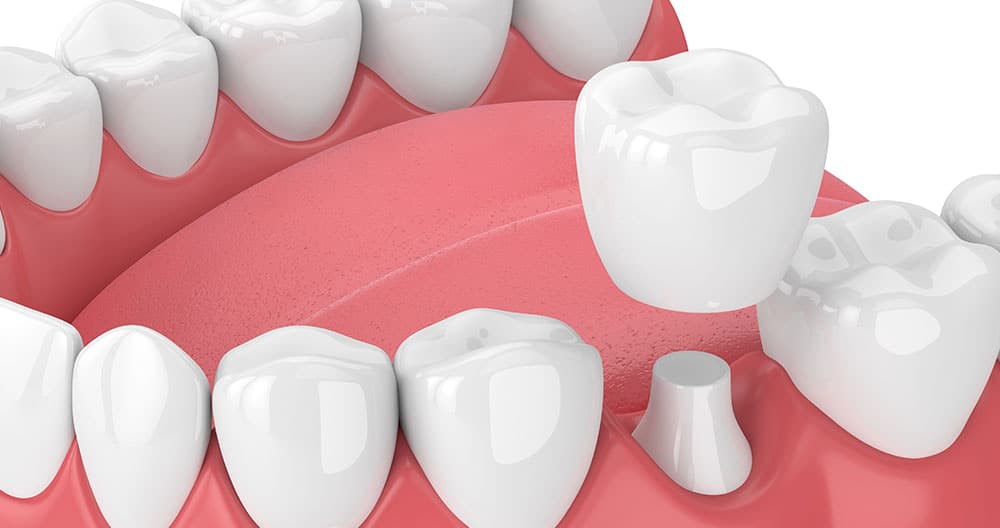
A dental crown is a custom-made cover that fits over a damaged tooth, from the gum line up. It restores the tooth’s shape and helps protect what is left of it. At BWG Dental Centre, 88 Barrie Street in Bradford, Dr. Rebeca Riojas-Ozturk, our general and family dentist, provides crowns for natural teeth and for implants that have healed.
If your dentist has suggested a crown, you probably have questions about why, what it involves and what it costs. This page goes through each in turn.
When does a tooth need a crown?
A crown is usually suggested when a filling alone is no longer enough to hold a tooth together. Common reasons include:
- A large filling that is failing, leaving thin walls of tooth that could break
- A cracked or broken tooth, including one that hurts on biting because of a crack
- A tooth after root canal treatment, especially a molar, which can become more brittle
- Heavy wear from grinding or clenching
- A badly shaped or discoloured tooth where other options would not work well
- An implant that has healed and needs the tooth that goes on it
- Holding a bridge that replaces a missing tooth
Not every damaged tooth needs a full crown. Your dentist will look at how much healthy tooth is left and explain the options before anything is decided.
Is there an option between a filling and a crown?
Sometimes. The practice also provides inlays and onlays. These are custom-made pieces that repair part of a tooth, for example one or two cusps, without covering the whole tooth. An onlay can keep more natural tooth than a crown, but it is only suitable when the remaining tooth is strong enough.
Smaller areas of damage can often be repaired with a white filling. Your dentist will tell you which of these fits your tooth, and why.
What are crowns made of?
Crowns can be made from several materials, and each has its own strengths.
| Material | Often chosen for | Things to know |
|---|---|---|
| Porcelain or ceramic | Front teeth and visible back teeth | Tooth-coloured and natural looking |
| Porcelain fused to metal | Strength with a tooth-coloured surface | A thin dark line can sometimes show at the gum |
| Metal alloys | Back teeth under heavy biting forces | Very strong, but not tooth-coloured |
Many patients prefer porcelain or ceramic for a natural look. Your dentist will recommend a material based on where the tooth is, how you bite and what matters to you.
What happens when I get a crown?
A crown usually takes two visits, with time in between for a dental laboratory to make it.
First visit: preparing the tooth
- The tooth is frozen with local anaesthetic.
- Any decay or weak old filling is removed, and the tooth may be built up with filling material first.
- The tooth is shaped so the crown can fit over it.
- A record of the tooth is taken. This may be a digital scan or an impression, so the crown can be made to fit.
- The shade is chosen to suit your neighbouring teeth.
- A temporary crown is fitted to protect the tooth until the final crown is ready.
Second visit: fitting the crown
The temporary crown is removed and the final crown is tried in. Your dentist checks the fit, the colour and your bite, makes any small adjustments and then cements the crown in place.
How should I treat a temporary crown?
A temporary crown is held with a softer cement, so it needs a little care.
- Chew on the other side where you can.
- Avoid sticky foods such as toffee and gum, and very hard foods.
- When flossing, slide the floss out sideways instead of lifting it up, so you do not pull the temporary off.
- If it comes off, keep it and call us. Do not leave the tooth uncovered for long.
What is it like living with a crown?
Once it is fitted, a crown is cared for much like a natural tooth. It is common for the tooth to feel slightly different or a little sensitive for a few days.
- Brush twice a day and clean between your teeth daily, paying attention to where the crown meets the gum.
- Keep regular dental hygiene visits. The tooth under a crown can still decay at the edge.
- Avoid using your teeth to open packages or crack nuts.
- If you grind your teeth, ask about a night guard to protect your crowns and natural teeth.
Call us if the bite feels high after the freezing wears off, if the crown feels loose, or if you notice a chip.
How long does a crown last?
There is no fixed answer. Many crowns last for years with good care, and some last much longer. Results vary with the material, how you bite, whether you grind, and how well the tooth and gum are looked after. A crown that wears out or chips can usually be replaced.
What affects the cost of a crown?
We do not list prices online, because every tooth is different. The main factors are:
- the material chosen
- whether the tooth needs a build-up, a post or root canal treatment first
- whether the crown is on a natural tooth or an implant
- your dental insurance or Canadian Dental Care Plan coverage
We go over the expected cost and what your plan is likely to pay before treatment starts. The practice participates in the Canadian Dental Care Plan, which lists crowns among the services that may need approval from the plan before treatment.
Frequently asked questions
Is getting a crown uncomfortable?
The tooth is frozen before it is prepared, so most patients feel pressure rather than pain during the visit. The gum around the tooth can feel tender for a day or two afterwards.
Can a crown be whitened?
No. Whitening does not change the colour of a crown. If you are thinking about teeth whitening, it usually makes sense to do it before a front crown is made, so the crown can be matched to your new shade.
What should I do if my crown falls out?
Keep the crown, avoid chewing on that side and call us. In many cases a crown can be cleaned and cemented back on, but the tooth needs to be checked.
Does every tooth with a root canal need a crown?
Not always. Back teeth often do, because they take heavy biting forces. A front tooth with most of its structure left may only need a filling. Read more about root canal treatment.
Why does my crowned tooth feel sensitive?
Some sensitivity to cold or to biting is common for a few days after a crown is fitted, as the tooth and gum settle. If it lasts more than a couple of weeks, gets worse, or the bite feels high, call us so your dentist can check the crown and the tooth underneath.
Can I have a crown on a front tooth?
Yes. Front crowns are usually made in porcelain or ceramic so they blend with the teeth around them. For a front tooth that is only chipped or discoloured, your dentist may also talk with you about bonding or a porcelain veneer, which keep more of the natural tooth.
Can a crown go on a dental implant?
Yes. Once an implant has healed, Dr. Riojas-Ozturk can restore it with a crown. If the implant itself is still needed, we can refer you for that step. Read about implant restoration.
Book a crown consultation
Call BWG Dental Centre at (905) 775-7005 or use our appointment request form. If a tooth has broken or a crown has come off, mention it when you call so we can find you a suitable time.