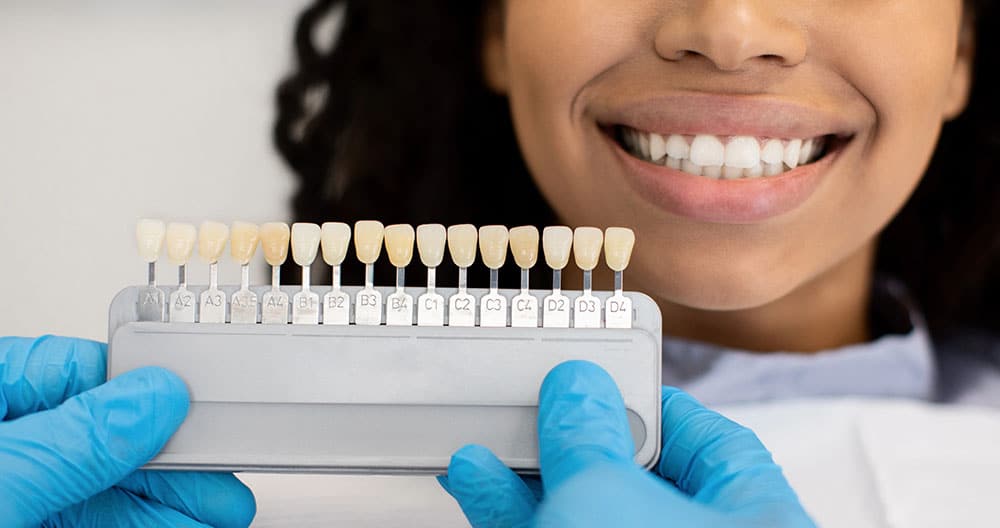
If your teeth look more yellow or dull than you would like, professional whitening is one of the simplest cosmetic treatments in dentistry. At BWG Dental Centre on Barrie Street in Bradford, Dr. Rebeca Riojas-Ozturk offers two approaches: whitening done in the office, and whitening you do at home with a kit from the practice.
This page is organized around the decisions you would make along the way. Is whitening right for you? Which option fits? What happens during treatment? And how do you keep your teeth looking brighter afterwards?
Step 1: Is whitening right for me?
Why do teeth change colour?
Teeth are not naturally pure white. The outer enamel is partly translucent, and the layer underneath it, called dentin, is more yellow. As enamel slowly thins with age, more of that colour shows through.
Beyond that, everyday things leave stains on the surface and within the enamel. Coffee, tea, red wine, dark sauces and tobacco are common causes. Plaque and tartar build-up can also make teeth look darker than they are.
What kinds of discolouration respond to whitening?
Yellowish discolouration from age, food, drink and tobacco usually responds well to whitening. Some other types of staining respond less, or not at all. For example:
- grey or brown discolouration that comes from inside the tooth, such as staining from some medications taken while teeth were forming
- a single tooth that has darkened after an injury or root canal treatment
- white or brown spots in the enamel
For these, your dentist may suggest a different approach, such as bonding or porcelain veneers, or a combination.
What about crowns, veneers and fillings?
Whitening works on natural tooth structure. It does not change the colour of crowns, veneers, bridges or tooth-coloured fillings. If you have any of these on your front teeth, they may look different from the surrounding teeth once the natural teeth are lighter.
This is worth planning for. If you intend to replace an old crown or filling on a front tooth, whitening first and then matching the new restoration to the lighter shade is often the better order.
Is there any reason to wait?
Whitening should begin on healthy teeth and gums. Cavities, cracked teeth, worn or leaking fillings and gum inflammation should be treated first. Whitening gel on an exposed or damaged area of a tooth can cause discomfort.
If you are pregnant or breastfeeding, or if your teeth are already sensitive, let your dentist know. Many dentists recommend postponing cosmetic whitening during pregnancy and while breastfeeding.
That is why whitening at BWG Dental Centre starts with a check of your teeth and gums. If you are due for an exam or cleaning, a hygiene visit is a sensible first step, because surface stains removed by a cleaning are often part of the problem.
Step 2: Which whitening option suits me?
The practice offers in-office whitening and at-home whitening kits. Both use professional whitening gel under the direction of your dentist.
In-office whitening
In-office whitening is done in the dental chair in a single appointment. Your gums and lips are protected before the gel is applied to the teeth, and the gel is left on for a set time before it is removed.
This option may suit you if:
- you want a noticeable change in a shorter time, for example before an event
- you would rather not manage a daily routine at home
- you want your dentist to control every step
At-home whitening
At-home whitening uses a kit from the practice that you use over a series of days, following your dentist’s instructions.
This option may suit you if:
- you prefer to whiten gradually and check the shade as you go
- your teeth are prone to sensitivity, so you want to control the pace
Why not store-bought products?
Over-the-counter strips, pastes and kits are widely available. They can lighten some surface staining, but there is no examination beforehand, so problems such as cavities, gum disease or a darkening tooth that needs attention can be missed. Poorly fitting trays can also let gel sit on the gums. A professional option gives you a check first and advice suited to your mouth.
Step 3: What should I expect during and after whitening?
Before you start
Your dentist looks at your teeth, gums and any existing crowns, veneers or fillings, and asks what you are hoping for. The current shade of your teeth is usually recorded so you can compare later. Your dentist tells you honestly how much change is realistic for your type of discolouration, and which option is likely to suit.
We will explain costs and payment options before you decide.
Sensitivity
The most common side effect of whitening is tooth sensitivity, particularly to cold. Some people also notice mild irritation of the gums. For most people these effects are temporary and fade within a few days after whitening ends.
If you notice sensitivity with an at-home kit, contact the office. Your dentist may suggest spacing out treatments, using the gel for a shorter time, or using a toothpaste for sensitive teeth.
How white will my teeth get?
That varies from person to person. It depends on your natural tooth colour, the type of staining, and how the treatment is used. The goal is a natural-looking, brighter shade that suits your face, rather than a colour that looks artificial. Your dentist can talk through what to expect before you begin.
Step 4: How do I keep my results?
Whitening does not prevent teeth from staining again. How long the brighter shade lasts depends a lot on habits. These steps help:
- Be mindful in the first couple of days. Teeth can pick up stains more easily straight after whitening, so it helps to go easy on coffee, tea, red wine and other dark foods and drinks for a short time.
- Rinse or drink water after staining drinks. It is a small habit that adds up.
- Use a straw for iced coffee or tea if you drink them often.
- Do not smoke. Tobacco is one of the strongest causes of staining.
- Keep up with brushing, flossing and regular cleanings. Professional cleanings remove surface stains before they build up.
- Plan occasional touch-ups. Many people choose a short touch-up treatment from time to time. Ask your dentist what timing makes sense for you.
Is whitening the only way to brighten my smile?
Not always. Depending on what bothers you about your teeth, your dentist may also talk to you about:
- bonding, where tooth-coloured material is applied to cover a stain or chip
- porcelain veneers, thin coverings for the front of teeth that can change colour and shape
- replacing old fillings with tooth-coloured fillings or updating a crown to match a lighter shade
- clear aligners, if crowding is part of what makes teeth look uneven; whitening is often done after aligner treatment ends
You can see the wider range of care at BWG Dental Centre on our services page.
Frequently asked questions
Does teeth whitening damage enamel?
Professional whitening used as directed by a dentist is considered a safe cosmetic treatment for healthy teeth. Starting with an examination helps make sure your teeth and gums are ready for it.
Is whitening sensitivity normal?
Yes, it is the most common side effect. For most people it is mild and fades within a few days after whitening ends. Tell your dentist if it bothers you.
Will whitening change the colour of my crown or veneer?
No. Whitening only works on natural tooth structure. Crowns, veneers and tooth-coloured fillings stay the same shade.
Should I have a cleaning before whitening?
It often helps. A cleaning removes surface stains and tartar, and your dentist can check for any problems that should be treated first.
Which is better, in-office or at-home whitening?
Neither is right for everyone. In-office whitening is done in one visit, while at-home whitening is gradual and done on your own schedule. Your dentist will help you choose based on your teeth and your goals.
How long does whitening last?
It varies. Diet, smoking and home care all play a part. Occasional touch-ups and regular cleanings help maintain a brighter shade.
To ask about whitening with Dr. Riojas-Ozturk, call (905) 775-7005 or use our appointment request form.